Thursday, November 11, 2010

Euro Part IV: Wien

At the crack of dawn, on the last day of August, I arrived at the International Bus Terminal in Vienna and immediately proceeded to help a Nigerian musician (off the bus) carry his hefty baggage across the street, up the staircase, and unto the U-Bahn. In exchange, though not keeping count, he orientated me on how to use the system and which line I needed. Less than an hour later I was walking up Rembrandtstrasse, on the northwest edge of town, ringing a young Austrian couple's doorbell I'd met briefly on their first visit to NY a couple years ago. I was amazed at how cold it already was. In NY it doesn't get that cool until the later parts of October.

Amadeo and Ruth had been referred to my front-seat, on-duty taxi tours by Melanie, an old friend of mine who they'd met in Berlin. They each enjoyed a cab ride and I promised to visit when I came to Europe. Life was now much different for them with the advent of a child, but they were still very much holding on to their sociopolitical ideals and to showing me around on bikes.

I only spent two days and two nights in the Austrian capital, and I didn't venture into the rest of the country, which is quite different, with its dramatic Alpine topography. I wasn't expecting too much from Vienna, and I didn't find much either. As everyone says, it's got a lot of historical architecture and an air of sophistication, but perhaps it was the incessant rain that put a dent on my outlook. The only thing I felt awed by were the miles and miles of high quality graffiti murals along the banks of the river.

One pit stop on our bicycle tour was an abandoned horse racing track, the seating all tossed around into heaps of decay. We also stopped at a monument erected by the Soviet Union, commemorating its liberation of the city in 1945.

On my final night in town my friends invited me to an interesting little activist center that doubles as a pay-what-you-wish gourmet restaurant named after the famed Soviet cosmonaut who in 1961 became the first earthling in space. There is a sign by the entrance offering shelter from racist assaults in German, English, Turkish, and French. Another sign in a bathroom stall reads something like "no shops with the Iranian regime. now under review."

After a delicious meal we walked back home, me in charge of pushing the baby stroller in as erratic, taxicab-like ways as possible, honking incessantly at his half-stiff parents and at all the imaginary vehicles in my path. I got a few good laughs out of the kid. At home we laid him to sleep and made ourselves cozy on the couch to watch 'Mary and Max,' off the living room wall, using Ruth's awesome projector. I highly recommend this film animation about two complete strangers on opposite sides of the world who become lifelong pen pals. It was way late after the screening, yet Amadeo convinced me to go explore the Augarten across the street, a 52 hectare Baroque garden from the 18th century, walled and gated at night (we had to jump.) It was real spooky to stroll through, especially in the nearly pitch darkness, with ominous war towers looming over us, whose Wikipedic description says it all:

Toward the end of WWII war strategists selected the strategically-placed Augarten as a site for the construction of several massive flak towers to protect the city center from Allied air raids. In the summer of 1944 the construction of one battle tower with a height of 55 meters (roughly 180 feet) and a leader tower with a height of 51 meters (roughly 167 feet) was begun, their bizarre appearance in the middle of the park having since become an integrate part of the Augarten. The construction associated with the building of the towers (16 lines of rail track, large barracks for construction workers, etc.) took a serious toll on the landscaping of the park. Also during the war hundreds of cubic meters of rubble were dumped on the site while armored vehicles criss-crossed the garden and supposed mass graves were dug in which hundreds of war victims were buried. However, except for the virtually indestructible flak towers and the bunker (in which a restaurant is housed) nothing from this period remains.

PICTURES FROM VIENNA:


NYU STUDENT PROJECT

A call to NYC cabbies who like to share their lives with others: get in touch! Oral Histories of New York City Taxi Drivers (By Margaret Fraser + Samantha Gibson) http://aphdigital.org/research/

Taxicabs undoubtedly constitute one of the most enduring symbols of New York City and we would argue that, like the image of the yellow cab, the city’s cab drivers also represent a unique and valuable facet of the New York City experience. Over the next nine months, we will research, plan, and create a project in which we will record and preserve oral histories of New York City taxi drivers. In the course of this process, we will create a research-based funding and institutional partnership proposal and, ultimately, a website through which we will foster dynamic and accessible public engagement with our oral history collection. As such, our project will constitute a bridge between oral history, digital history, and grassroots documentation of New York City.

Through full length oral history interviews with a diverse body of taxi drivers, we hope to capture some of the ways in which race, nationality, gender, class, and religion shape the cab driver’s experience. We anticipate that our oral histories may also reflect such pressing concerns as immigration processes, labor issues, and the intricacies of the taxi industry. Thus, we are at once interested in the individual life histories of our subjects as well as in the unique perspectives that cab drivers may shed on the landscape, character and people of New York City.

As we are fully aware that an institutional affiliation would bolster the credibility and sustainability of our project, we have decided to propose our project to three different institutional partners: Brooklyn Historical Society, City Lore, and NYU’s Robert F. Wagner Labor Archives. We are confident that we can design our project to align with the missions and institutional values of each of these institutions without losing our focus on the lives and personal narratives of our interviewees. As we craft alternate interpretive angles for our final project, we will reach out to a range of advisers, including oral historians, labor organizers, public historians, and archivists in order to create a project that is as valuable to our audience as possible.

BTW: PHOTO ABOVE I FOUND THROUGH A FASCINATING NUMEROLOGICAL ARTICLE RELATING TO TAXICABS, WHICH GOT THE PHOTO FROM WIKI: "taxicab".

Sunday, October 31, 2010

Almost Jacked


Just today I realized it, while driving past, that the two sketchy characters i had picked up on Atlantic by Smith a few weeks ago, who pretended to be undercover cops and gave me a hard time, and then got out ever so nonchalantly on a dark, abandoned street behind a housing project in Brownsville and walked away without paying the fare..... had come out of the Brooklyn Detention Center. I had never looked at the big sign on the entrance to that building. I just knew from peripheral vision that it was some sort of government facility. Drivers, please be careful picking people up on that block: Atlantic Avenue between Smith Street and Boerum Place.

These two men looked menacing from the moment they jumped off the curb and into the street, hailing me as I drove up. Of the thousands of street hails I've seen in my four years as a hack, I've only had to avoid and drive past half a dozen or so of them (all together) because I felt immediately threatened or disturbed by the prospect of their presence in my cab. My threshold is high. I pick up most anyone. But these two guys emanated bad vibes, out of their eye balls, facial gestures, and body language. Still, I picked them up because I glanced and there was a cop car in my mirror. I did not want to be stopped for refusal. Though I've had cops tell me some disgusting things I'd never expected from them....

"this is your fault. why do you pick up drunk people?" (in response to a sleeping passenger.)
"you should never pick up people in this part of town"

Anyhow, I had them along for an excruciatingly long 20 minute ride out to the far eastern reaches of Brooklyn and they interrogated me the whole time about some guy named "Jinx" and how I must have some information on him. They said they were on a murder investigation and that once they caught him, he'd never see the light of day again. I grew very afraid that they were being metaphorical about what they planned for me. They also said a lot of really stupid stuff and after the first two minutes of the ride, the tiny little part of me that had believed their purported NYPD role collapsed. I really got scared when I learned they had smelled fear on me."why you so scared, man? what are you scared about?"

For a minute after we had pulled over at their destination, they messed around with me some more. They'd look at me and smirk at each other, as if deciding whether I was worth robbing or not. Finally, one of them lifted up a twenty dollar bill at the partition, and said....
"take this and get the hell out of here. don't blow our cover."

But when I reached for it, he pulled it back quickly, and they stepped out of the taxi, calmly and with an evil little giggle. They walked away ever so slowly, with mad swagger. I sighed with relief and quickly drove away and out of that neighborhood. I felt lucky to be alive at that moment. Sure, a little part of me wanted to go back and run after them with any piece of metal lying around, demanding my money, but that would not be wise at all. It's like instead of getting paid 20 dollars for my service, I paid 20 to keep my life. What a bargain. The rest of my life for only 20 dollars. This is the first time in four years of cab driving that I felt in that much danger.

Tuesday, October 26, 2010

Euro Part III: PL to AU

August 29th: Katowice to Krakow via Nazi Camps:

The petite and energetic Colombian athlete raced off into the mountains in a taxi, while I stayed back and continued my own journey, but not without his pleading attempts to convince me of joining him up there so I could watch a compatriot compete in this foreign land. He probably also hoped I would just remain by his side for the rest of his trip, as an English mediator in the wide divide between his Spanish and everyone's Polish, as if my own language barrier wasn't tallenough.

Perhaps the creator was calling me to this task as well, not just that of funding the guy's 100 kilometer taxi ride. Alas, I declined, feeling a need to focus on my own needs for once. Next on the original plan was Auschwitz, and I was sticking to my guns. I found a cheap bus to Oswiecim (Polish name for the small town adjacent to the camps), and another more local bus that dropped me off within a few hundred feet of the entrance. I spent the rest of the day touring the two most infamous WWII genocide camps, solemnly by foot under semi-overcast skies.
AMALGAM OF PHOTO CAPTIONS:
The train/bus station in Katowice. Few tourists seem to make it here. A taxi stand across the street in Katowice. All the drivers congregating.

The people of Oswiecim (pronounced "oshvichim") are tired of being known only for the atrocities their neighboring nation chose to commit in their backyard, and their welcome sign proudly announces that the town has over 800 years of history, not just 60 something.

Most people don't walk past this sign with the bicycle because they arrive on a big, organized tour bus, or by family or rental car on a road trip. I am one of the few who got there entirely by mass public transport and foot. I got to see what most ignore on the way here. The faces of the elder Polish locals on the bus who lived through it all, and are still here to see the sort of Disneyland theme park it's become.

Three out of four of my grandparents escaped from homes not far from here, as teenagers. They embarked on boats on both the Baltic and Adriatic seas, and arrived as refugees on foreign lands. I'm glad my grandparents weren't suckers who stuck around to see what might happen. I kind of feel like a sucker sometimes for sitting back and watching while the world around me slowly implodes upon itself.

Since they now require all visitors to sign up with an official guided tour at the first camp (the one with the museum) if you come between noon and 3 pm or so (which costs a hefty chunk of dough), there's a way to bypass that. Just catch the free shuttle bus over to camp #2, also known as Birkenau, or the Vernichtungslager (extermination camp.) It'll take you at least a couple solid hours to traverse the entire place.

It's an enormous field spanning into the horizon, sprinkled with variously-purposed structures, ranging from fully intact to intentionally dynamited (to conceal evidence.) If you take the free shuttle bus back to "base camp" anytime after 15:00, admission becomes free again. It's really self-explanatory and full of descriptive diagrams, like any museum. It was originally the labor camp that coincided with its nearby death camp counterpart. It's hard to truly comprehend all of what there is to feel and how it must have been for the prisoners. May the creator have mercy on all of humanity for all of its (ongoing) mistreatment of its own people and habitat.

Late in the afternoon I caught a ten dollar bus to Poland's second largest city. That night was the only time in the entire two month trip that I crashed at a youth hostel. For ten dollars I got a shower, a bed, three funny roommates from Belgium and New Zealand, and a continental breakfast (coffee and snack.) I enjoyed the vibe there. Not too much of anything and not too little. I went across the street to a corner store and came back with cheap Polish beer for all of us, and we shared a few cross-cultural laughs.
The next day I walked a bridge over the Wisla river from Kazimierz to Podgorze, while imagining what it might have been like to be a Jew in the 1940's, forced to abandon my home in central Krakow, and resettle in cramped quarters behind newly erected walls, fulfilling the dictator's promise of making Krakow the "cleanest" (most Aryan) Polish city under his rule. I even walked past the famed old factory of Oskar Schindler. Not a tear rolled down my face, as is the case with the movie every time (without fail). Only a very unsettling feeling and an almost disbelief about that whole time period. Not to mention ours.

When I called my grandpa to tell him I'd just been to his hometown, his schizophrenic alzheimer response was, "Why did you go there? That's where all of our people were killed. There is nothing to go do over there." Oops. Sorry I said anything.


"ESCAPE THE SHADOWS! LET ME HELP YOU" is what the billboard says. I did in fact witness what I perceived to be quite a bit of depression in the air, at least in the southern quadrant of Poland I passed through. Maybe not so much the younger generations as with the older ones, the latter of which outnumber the former. It seems to me a country stuck between the old left and the new right, or perhaps I'm just politically clueless. It seems very uncomfortable with itself, or maybe I'm just uncomfortable with myself and projecting that unto the innocent Poles.

My overnight bus from Krakow to Vienna, clear across Slovakia, was uneventful. I slept right through it all, arriving in the Austrian capital at daybreak. The next entry will be about the friends I paid a visit, and onward into Magyarorszag (what Hungary calls itself), Serbia, and Romania.

The Slovaks reading this are probably wondering why I dashed right through their country without even opening my eyes. Well, you can't do it all in one trip and I chose to focus on the places where I had contacts and invitations lined up.

HERE ARE SOME PIX FROM LONDON I FORGOT TO POST ON THE UK ENTRY:


:
AMALGAM OF CAPTIONS FOR ABOVE SHOTS:
My lovely friend Alfie, a Parisian living in London. I met him in Nevada after Burning Man 2009.
My Scottish friend Gregor and his English wife Zoe, who lent me their couch for a night in London. Thanks again you all for making a near-stranger feel like family. Gregor and I met randomly while backpacking through South America in 2007. See the taxi driver sitting in the backseat, reading the paper? He's taking a break on the inner circle at Regent's Park. I told him we have relief stands in NYC where we like to do that. It was a nice moment of international laborer solidarity. New Yorkers can't request an instant text message for the 3 nearest cabs. But Londoners can! What's with the number 3 and taxis in London?

Monday, October 25, 2010

Expanding Horizons

After making nearly 700 dollars over the span of the last 3 shifts, sleep deprivation caught up with me this morning. It was almost 6 am when I woke up. That's major lateness in my world. I called up the dispatcher, apologized, and said I'd be there shortly. He told me not to worry about it. All the cabs had already gone out anyhow. He had even had to send some guys home.

I'm always the first driver to show up and wait for the first available cab back from the night shift. Sometimes as early as 1 am. I'm also the first one back from the day shift in the afternoon, which enables the early bird night drivers to get out quicker too. It's called "staggering the shifts" and it's what New Yorkers have always desired wishfully. So it took my 36 hours of urban driving to make 7 benjamins. And I had my own life in between. That doesn't add up to all that much sleep.

A driver must call his dispatcher before the shift begins, to warn he won't be leasing a cab today, thereby releasing the reservation, so the cab can be used by another driver. I had slept right through that task, so I was at risk of being placed on the "no show" list, a.k.a. the management's "shit list." These are driver whom the garage has deemed untrustworthy and apathetic. Luckily I have a very sound relationship with my dispatcher, who protects me from the management's wrath.

My mother and I took a long stroll through our neighborhood today. It was nice to be out and about with her on such a perfect autumn day, and not cooped up in a yellow chunk of fiberglass. We stopped by at the Metropolitan Pool and Fitness Center, where I renewed my recreational membership card, and got her one too. Since she's 56 years old, hers was only $10 for the entire year.

My father will be turning 55 on January 1st, so then he'll get the same discount. The place has a swimming pool, cardiovascular workout room, weight room, lockers, and showers. Other branches have even more amenities, like all kinds of free yoga and tai chi classes. I'm proud of the prospect that my mother might be exercising more regularly. Not to mention myself.

Sunday, October 24, 2010

MUPNY OF THE YEAR


The Gusberto Gilgulim Award
for Most Unique Park in NY goes to...
COLUMBUS PARK
...in Chinatown (but only when it's filled to the brim with people and all their oddities). It sits on the same spot as the legendary 1800's immigrant slum (Five Points), bordered by Worth, Baxter, Mulberry, and Bayard Streets. On most days, you can find hundreds of people milling about in this tiny green space for a spectrum of purpose.... Tai Chi, table games (like Chess), live traditional Chinese music, relaxing on enormous rocks or with caged birds, sports, festivals, outdoor events, public assemblies, etc. It's a cacophany of human spirit, secretly tucked away behind the neighborhood, but every so often a tourist or two will stumble in and sit down in awe.

IMAGE CREDITS & INFO:
THAT WAS THEN (painting by George Catlin)
THIS IS NOW
[picture by Gastrodamus (flickr)]

Saturday, October 23, 2010

HAPPINESS FOR NO REASON

Since Sesame Street played a significant role in my upbringing, and Pakistani culture contributed to my adolescent understanding of the world (my best friend in middle school was from there), and since the combining of cultures, styles, idioms, etc. is a favorite pastime of mine, I present to you this hilarious little music video of Grover grooving to a 1970s Pakistani film song.

I come across such fascinating eccentricities as the clip above thanks to good friends who know what sorts of ethno-meshing make my day, and take the time to send me the links. The same thoughtful ally sent me the audio-clip below, which is from WNYC radio. It's a short interview with the official borough historian of Queens, who answers questions like how Flushing really got its name. I love history as it relates to ethnology and geography.

1.

In other news, a drunk tourist from the U.K. pissed in the backseat of my cab, a while back. I wanted to share this event with you right away, but of course I got caught up in other endeavors.

He hailed me outside of Southside night club in SoHo and asked me to follow the minivan cab in front of me, which had just picked up four women. I didn't know if they were together, but it all seemed odd to me from the start. I made a left and another left, trailing right behind the other cab. As soon as we stopped at the first red light I began hearing the sound of a liquid stream behind me. I asked him what that noise was and he replied that it was his beer and he apologized for accidently spilling it. That's a common occurrence late weekend nights as people pile into taxis. I went back to silent driving concentration.

At the second red light the stream of liquid resumed and I became certain it was urination, though I was in utter disbelief. I turned my entire body around and peeked over the bottom of my partition to see him holding his penis out toward the floorboard and an arch ending in a puddle, and splattering on the seat cushion, partition, and TV screen.

He immediately flung back in embarrassment, zipped up his pants, and begged for forgiveness. I yelled at him and threatened to drive him straight over to the first cops I could find. I would have to clean up that mess. I interrogated him as to why he didn't just ask me to stop somewhere so he could go. "Cause I didn't wanna lose that cab with the pretty girls in it."
The cab had already disappeared ahead anyhow, and he offered me twenty extra dollars if I would just pull over right there and let him go. I snatched the cash from his fingers and told him to scram. Then I spent 10 minutes wiping everything down with Lysol and continued my shift.

The way to bring about the messiah (codeword for immortality and a few other goodies), according to Kabbalah, is to be happy for no good reason at all. The music video up top and otherworldly quirks like it give me that feeling of happiness for no reason. Just smile, dance, laugh, hug, care... just because. The opposite would be the usual human condition known as "hatred for no reason." That, I'd like to add, is not how I feel about the silly Londoner who thought he could get away with pissing in my cab. As inconsiderate as his actions were, they really weren't the end of the world. They were probably just hidden little blessings. Perhaps it happened so that I'd stop following the other taxi with girls who probably didn't want anything to do with him. Anyhow, I didn't stay mad at him for long at all. He sort of just made me laugh inside. I giggle every time I picture the scene in my head.

Friday, October 22, 2010

Wednesday, October 13, 2010

Obscure Flags


#1) This is the un-agreed upon flag of the Roma people. Not to be confused with the Italian capital, nor the Romanian nation. The Roma are an ethnic group, originally of a South Asian origin, who have led semi-nomadic lives over the span of centuries, and have spread throughout the world, particularly in Eastern Europe. They tend to reside in "depressed squatter communities (isolated ghetto-like settlements)" and are known for their unparalleled musicianship. They often scavenge their sustenance from dumpsters and the like. I admire these people as free spirits. I guess their nickname as "gypsies" has a bad connotation, but to me they are nothing short of unadulterated human goodness.

#2) The ancient Indian spiritual path of Jainism has also its own emblem. The swastika has existed as a symbol of good fortune in the Indosphere for a very long, long time. Long before the Nazis perverted its meaning, and still today. Jainists pursue self-effort and extreme non-violence.

#3) This flag, known as the Wiphala, represents the Aymara people, an indigenous ethnic group in the Andean region. Its most recent exposure to the world came minutes ago when it was flown by a relative of one of the trapped miners in Chile who has been rescued. He is the only Bolivian that was down there. In 2009 the Bolivian government declared a new constitution, which added this as a national flag, alongside the other.

Tuesday, October 12, 2010

Anonymities

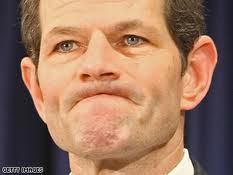
This man, ex-governor of New York state, hailed my cab on Columbus Day. He was only going about 20 blocks down Fifth Avenue and I didn't utter a word. I didn't want to embarrass him. Then again, I've been told he's over the whole scandal and that he now has his own CNN show. I just want people to feel comfortable in my taxi. If celebrities want to get noticed, they go to L.A.. If they want to feel anonymous, they stay in New York City. So you're Eliot Spitzer. So what?

What's ironic is that the man who took his place, Governor Patterson, has vetoed the amendment that was passed by both congress and senate, making it a felony to assault a taxi driver. He thought the legislation was too complicated. WTF? I wonder if Spitzer would have vetoed it too. I didn't feel much warmth from the guy anyway.

Friday, October 8, 2010

Dream Home Among Many

I would love to live in one of these, some of the time.
My ex-partner wanted to help me build one.

Thursday, September 30, 2010

Journey Thru Europe: Part II (UK to PL)


carto-credit: serio-comic map by Fred W. Rose from 1877

The last thing I did in London before boarding a plane to Poland was to go see Magnificent Maps: Power, Propaganda, and Art-- a free exhibition featuring one hundred of the world's greatest maps, picked out of 4.5 million items (world's largest cartographic collection) at the British Library. If you know me, you know this is something I wouldn't miss. I crammed it in last minute, before catching a shuttle to the airport. My favorite quotes were "Maps are rarely just about geography" and "Maps are works of art that need to be visually pleasing in order to convey information successfully. It was particularly difficult to distinguish 'maps' from 'art' before 1800, when they were sometimes the work of professional artists."

By the Marble Arch I sat, awaiting the "coach" (bus in British.) A young couple and a slightly older lady walked up and stood beside me, speaking in a language unlike most others. I glanced over and asked if they too were headed to Luton Airport. The young couple were indeed on their way back home to Hungary, and the slightly older lady was the young man's sister, who resides in London. I explained that I was on a two- month journey through Europe and that this was the beginning of the second half, the part I'd be traveling alone. We became engrossed in a conversation about life's purpose and I was relieved to discover that their spiritual paradigm resonated with mine. Since I mentioned I'd be passing through their country in a week, they invited me to visit them in Budapest.

The flight to Polska was very Polish. The cabin air was filled with that west Slavic twang and 95% of the backs of people's heads either had long blond hair or reminded me of those two clay humanoids in the Gumby animation (the Blockheads.) Do not mistake me for a Pole-hater. My maternal grandfather was originally from Krakow and I feel proud of my roots. I landed in Katowice around midnight and stayed in the airport until daybreak. I had a lovely chat with the part-owner of a 24- hour cafe inside. He served me free coffee as a gesture of Polish hospitality, which I wouldn't see much more of during my two days in south-central Poland. In fact, the great majority of people I crossed paths with in the area seemed downright jaded and miserable.

On the bus into town (Katowice) from the airport I met a petite and modest, but world-class marathon runner from the mountainous, rural Colombian region of Huila, who had been delayed entering the EU in Spain due to the usual visa complications. Owning a Colombian passport isn't always enviable, and I speak from first-hand experience. The race he had dreamed of participating in his whole life was going to begin in less than three hours, in a village (Korbielow) on the mountainous border with Slovakia. He still had 100 km left to travel when we stepped off the bus. A train wouldn't get him there on time. His only option would be by taxi. No driver was willing to rush him all the way up there for under 500 Zlotys ($172), way beyond his means, so I hit up an ATM and off he took in a beat up little station wagon. I was relieved to be letting go of a large portion of my 10% that isn't really mine (tzedakah), all while helping a campesino make it to the World Masters Mountain Running Championships, as well as helping an older Polski taxi driver bring home some bread.

Ad by Western Union, a shameless corporation that feeds off hardworking immigrants worldwide, but the ad has a nice outline of Poland and within it is an entire continent and a half. 'TAK' means 'YES', as in "that's right" or "that's the way".


TO BE CONTINUED........
NEXT STOP: Auschwitz Concentration Camp and Krakow.